时域天文前沿研讨会暨国家重点研发计划课题科学讨论会在云南大学举行
Symposium on Frontiers in Time-Domain Astronomy and Scientific Workshop for a National Key R&D Program Project Held at Yunnan University
大天区高精度多波段巡天是发现宇宙新天体、探索天文暂现现象及揭示天体物理过程的重要研究手段。由云南大学研制的梦飞巡天望远镜是国际首台能够拍摄宇宙天体运动变化彩色纪录片的多通道测光巡天望远镜,可实现三个波段同步开展大视场巡天,并实时获取天体的高精度星等和颜色信息,为变源与暂现源的快速证认、分类及后续深入研究提供了重要观测支撑。近年来,爱因斯坦探针(EP)卫星、中法天基多波段空间变源监视器(SVOM)伽马射线卫星等高能空间观测平台相继取得重要进展,为开展宇宙变源与暂现源的多波段联合观测和高能时域天文研究提供了新的机遇。
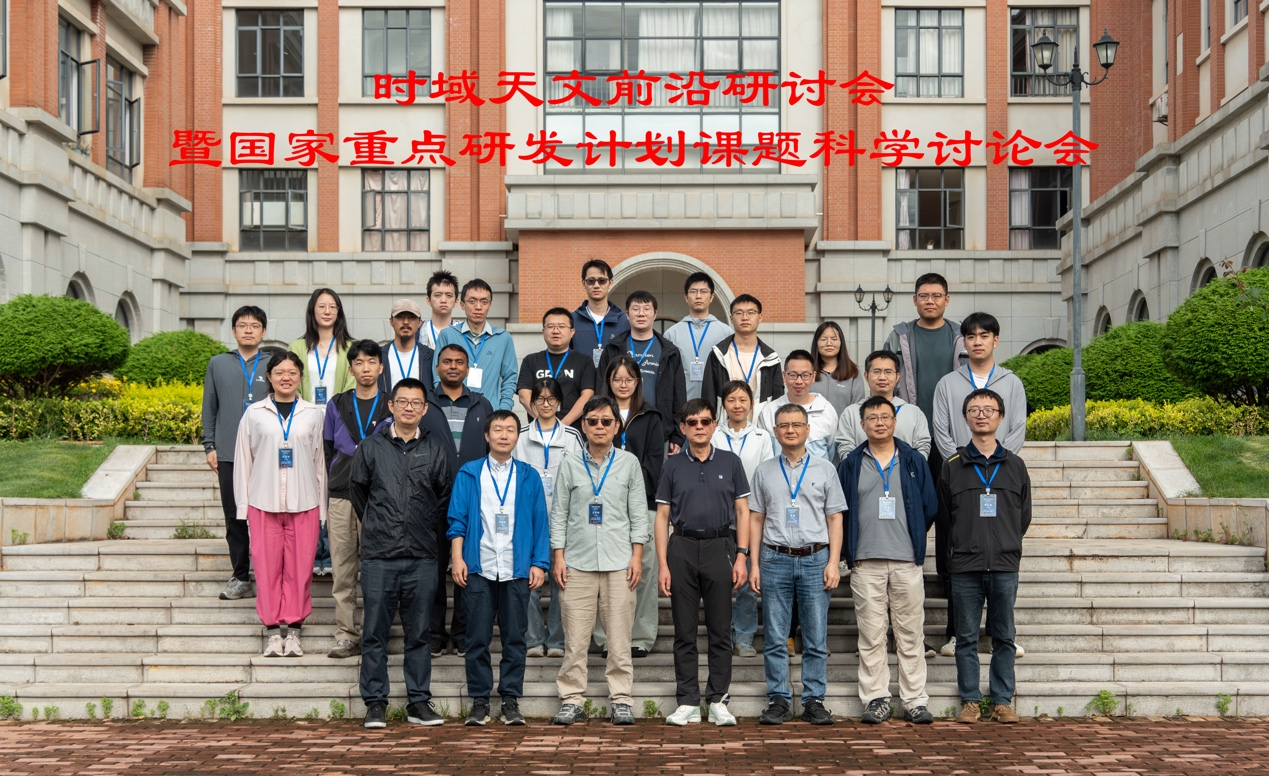
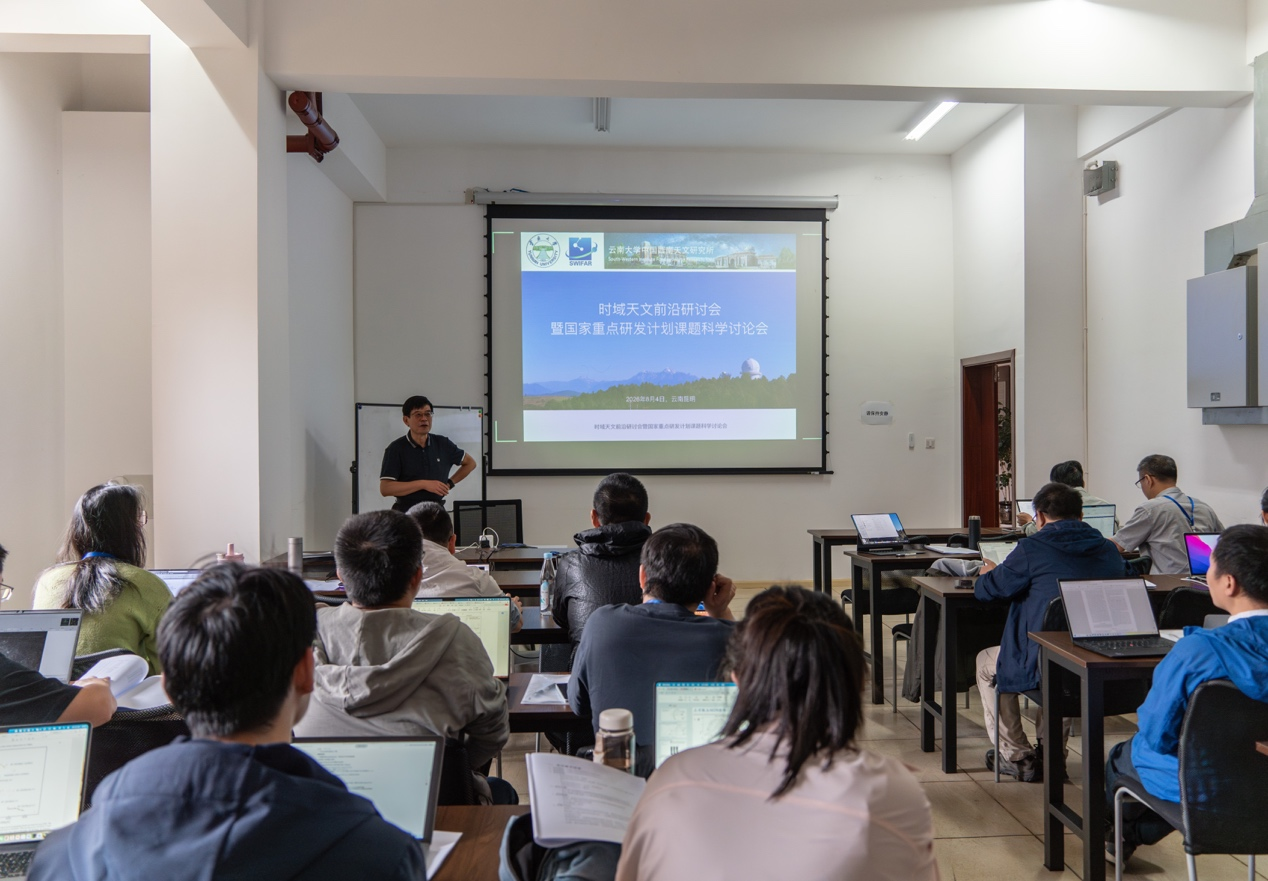
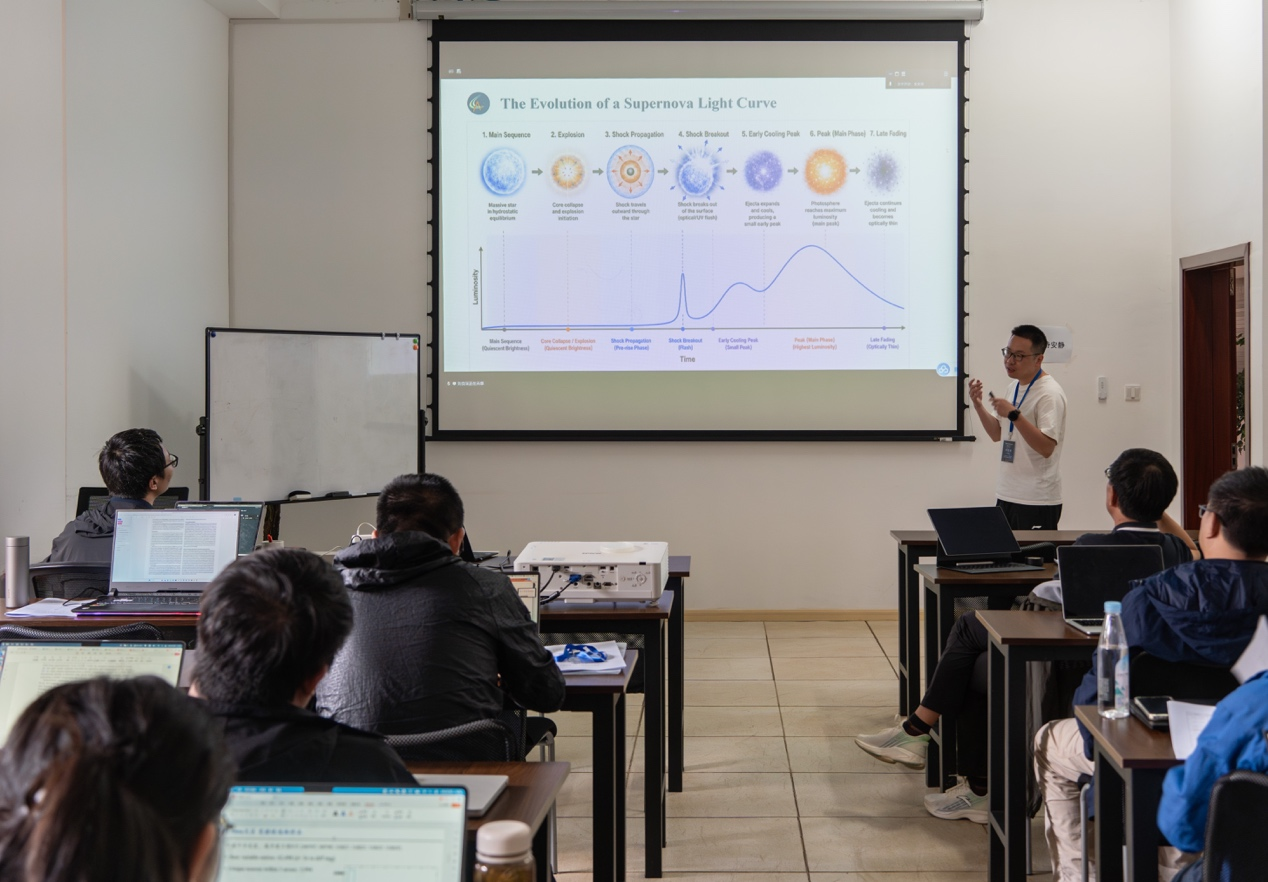
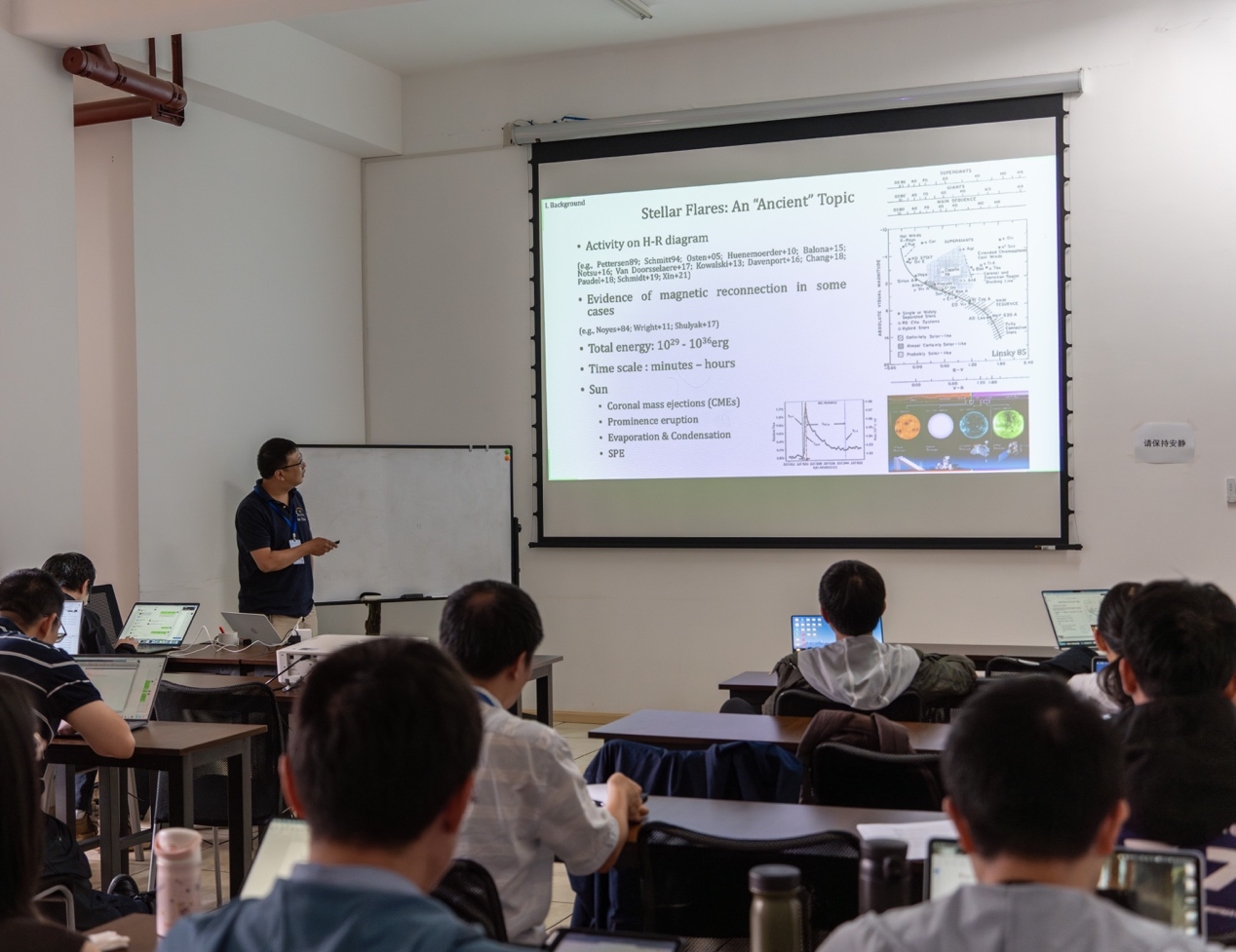
2026年8月4日至5日,由云南大学中国西南天文研究所主办、依托国家重点研发计划“基于梦飞巡天望远镜和高能天文卫星的近邻宇宙与时域天文前沿研究”项目开展的“时域天文前沿研讨会暨国家重点研发计划课题科学讨论会”在云南大学呈贡校区举行。来自中国科学院国家天文台、北京师范大学、天津师范大学、华中师范大学、郑州大学,以及意大利帕多瓦天文台等单位的专家学者,与云南大学相关科研人员共同参会,围绕梦飞巡天望远镜的高精度真彩色巡天、高能天文卫星与地面望远镜的空地协同观测,以及银河系和近邻星系变源与暂现源的物理起源、爆发机制和族群性质等前沿问题开展学术交流与科学讨论。
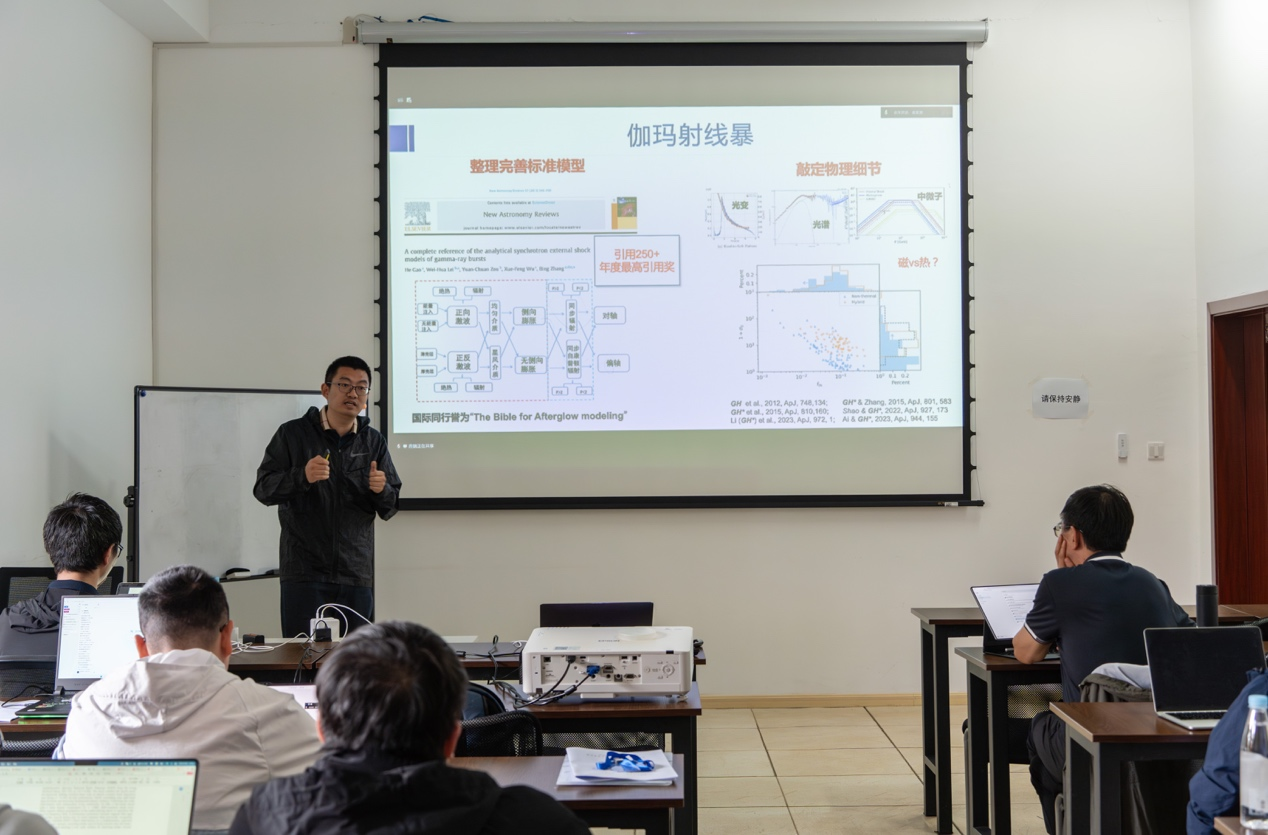
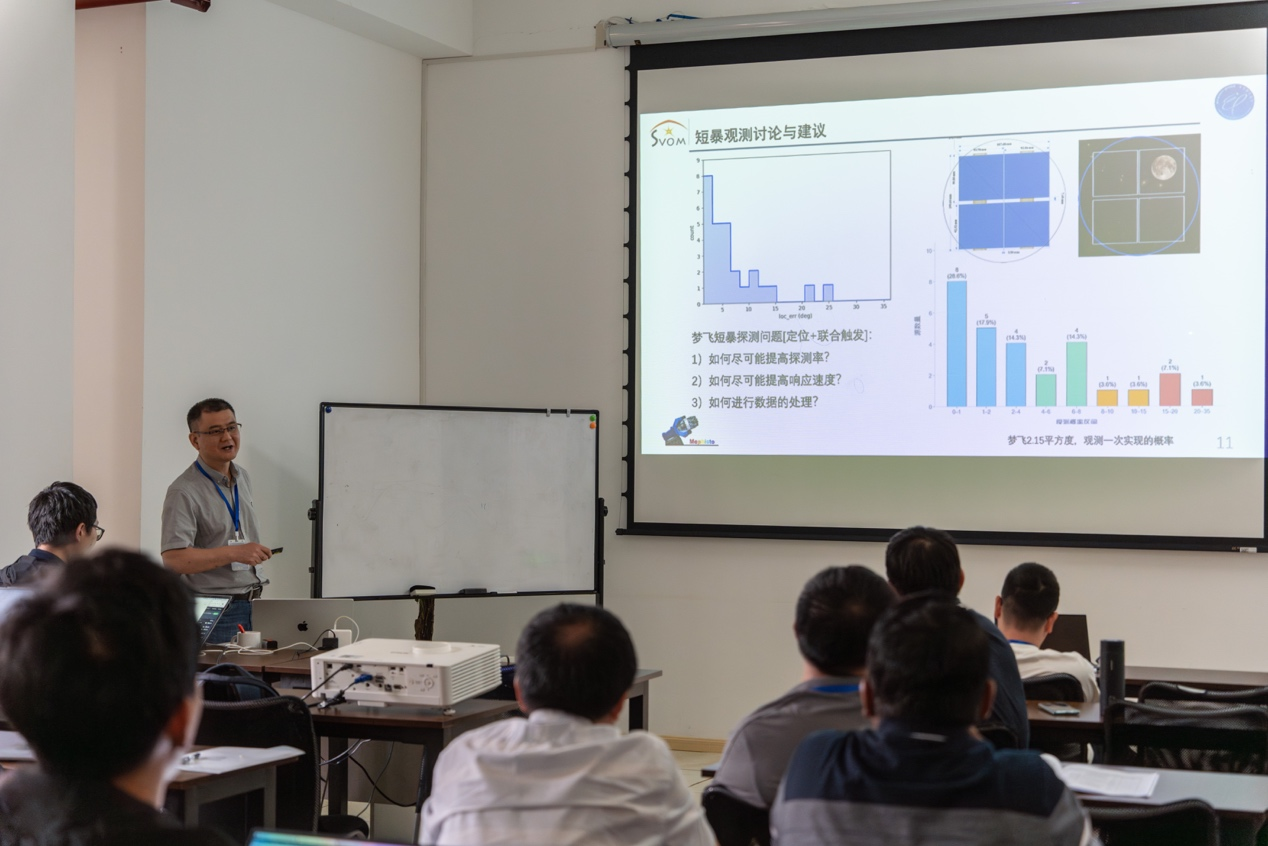
本次会议重点围绕国家重点研发计划项目相关课题的研究进展与科学目标展开研讨。其中,课题三“基于梦飞时域巡天变源暂现源的物理起源及族群性质研究”聚焦时域巡天中变源与暂现源的发现、物理起源及族群性质等科学问题;课题四“基于高能卫星及梦飞后随观测的暂现源爆发过程与机制研究”重点关注高能卫星与地面望远镜的协同观测,以及暂现源爆发过程和物理机制的研究。与会人员围绕相关课题的科学问题、观测策略与研究方向进行了深入交流,为后续研究工作的开展提供了有益思路。
随着梦飞巡天望远镜持续推进高精度、多波段时域巡天观测,以及EP、SVOM等高能空间观测平台不断取得新的科学进展,空地协同、多波段联合观测和快速后随监测正成为探索宇宙变源与暂现源的重要途径。本次研讨会进一步促进了相关领域科研人员之间的学术交流与合作,为推动梦飞巡天观测与高能天文卫星的协同研究、深化近邻宇宙及时域天文前沿科学问题研究创造了良好条件。
本次会议的召开,有助于加强项目课题组之间的沟通协作,凝聚相关领域的研究力量,为国家重点研发计划项目的持续实施和近邻宇宙与时域天文研究的深入开展提供支持。

Wide-field, high-precision, multi-band sky surveys are essential tools for discovering new celestial objects, exploring transient astronomical phenomena, and investigating the physical processes governing the Universe. Developed by Yunnan University, the Mephisto telescope is the first multi-channel photometric survey telescope internationally capable of recording the evolving motions of celestial objects in color. It enables simultaneous wide-field surveys in three photometric bands and provides high-precision magnitudes and color information in real time, offering new capabilities for the rapid identification, classification, and follow-up investigation of variable and transient sources. In recent years, significant progress has also been made in high-energy space astronomy, with the successful launch of the Einstein Probe (EP) and the China–France Space Variable Objects Monitor (SVOM), opening up new opportunities for coordinated multi-wavelength observations and time-domain studies of cosmic transients.
From August 4 to 5, 2026, the Frontiers in Time-Domain Astronomy Symposium and Scientific Workshop of the National Key Research and Development Program was held at the Chenggong Campus of Yunnan University. The meeting was organized by the South-Western Institute for Astronomy Research (SWIFAR), Yunnan University, under the national key research and development project entitled “Frontier Research on the Nearby Universe and Time-Domain Astronomy Based on the Mephisto telescope and High-Energy Astronomical Satellites”.
The symposium brought together researchers from the National Astronomical Observatories of the Chinese Academy of Sciences, Beijing Normal University, Tianjin Normal University, Huazhong Normal University, Zhengzhou University, the INAF Astronomical Observatory of Padova, and Yunnan University. Participants exchanged ideas and discussed frontier topics including high-precision, true-color time-domain surveys with the Mephisto telescope; coordinated observations between ground-based telescopes and high-energy satellites; and the physical origins, outburst mechanisms, and population properties of variable and transient sources in the Milky Way and nearby galaxies.
The discussions focused on the scientific progress and objectives of two research topics within the national project. Topic 3, “Investigating the Physical Origins and Population Properties of Variable and Transient Sources Identified by the Mephisto Time-Domain Survey”, addresses the discovery of variable and transient sources, their physical origins, and their population characteristics. Topic 4, “Investigating the Outburst Processes and Mechanisms of Transient Sources through High-Energy Satellites and Mephisto Follow-up Observations”, focuses on coordinated observations using high-energy satellites and ground-based telescopes, as well as the physical processes and mechanisms underlying transient outbursts. Participants exchanged views on key scientific questions, observational strategies, and future research directions, providing valuable perspectives for subsequent work.
With the continuing development of high-precision, multi-band time-domain observations by the Mephisto telescope and the growing scientific capabilities of high-energy space missions such as EP and SVOM, coordinated space- and ground-based observations, multi-wavelength studies, and rapid follow-up monitoring are becoming increasingly important for investigating cosmic variable and transient sources. The symposium provided a valuable opportunity for academic exchange and collaboration, helping strengthen cooperation in coordinated observations and advance frontier research on the nearby Universe and time-domain astronomy.
The meeting is expected to support communication and collaboration among the participating research teams and contribute to the continued implementation of the national project and the further development of time-domain astronomy research.
